
FROM THE FILES OF THE MARTIN CLINIC | EST. 1911
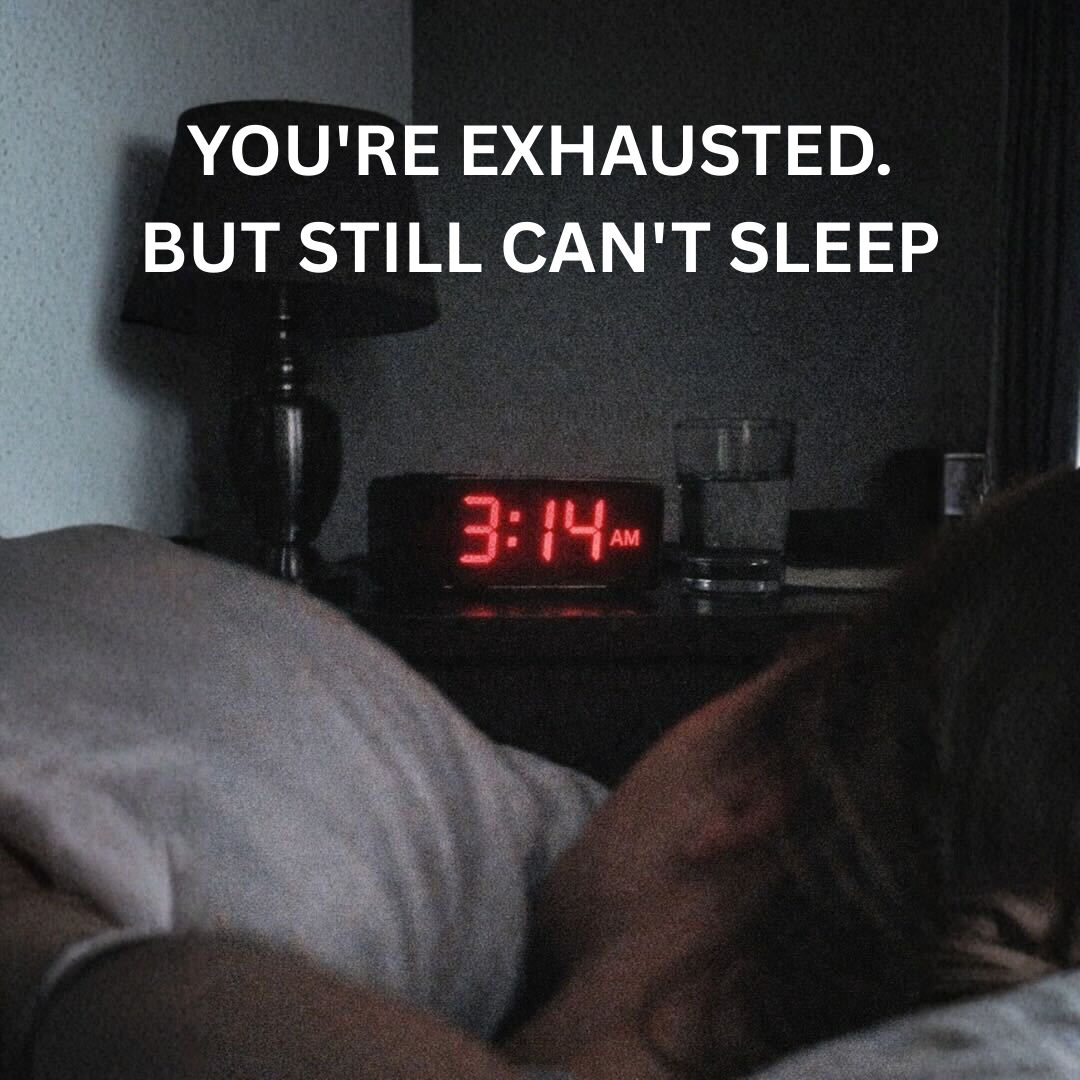
Morning: "I just want to sleep."
All Day: "I'm so tired."
Night: "Why Can't I Sleep?"
If this feels painfully familiar...
You're in the right place
⭐⭐⭐⭐⭐
TRUSTED BY 142,256+ CUSTOMERS!
✓ 60 day money back guarantee
Does This Sound Like You?
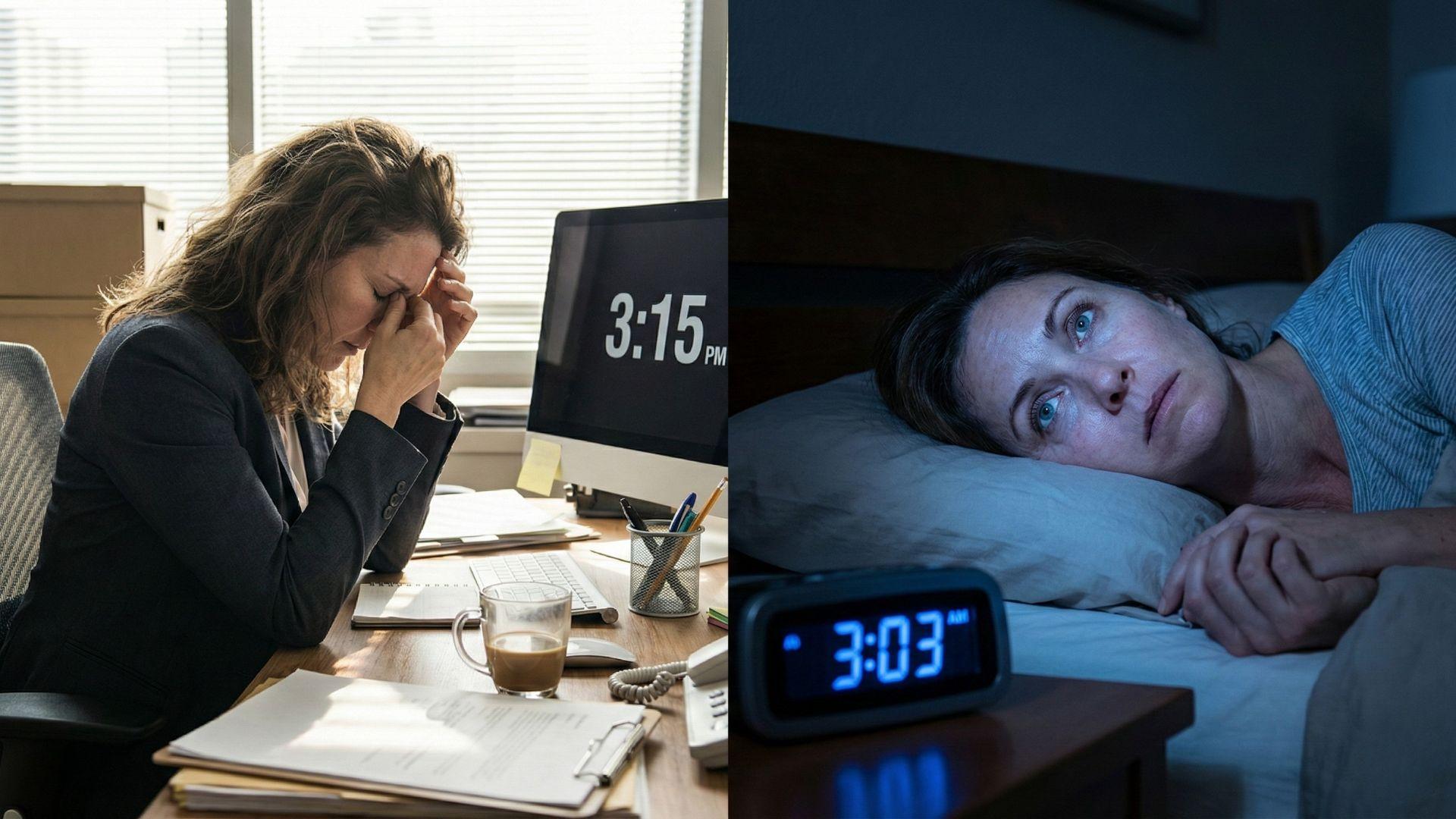
What Hormonal Insomnia Actually Feels Like
You know the feeling.
You during the day: Fighting to keep your eyes open.
You in bed: Wide awake. Staring at the ceiling.
It’s 11:00 PM.
You should be sleeping.
But your brain decides now is the time to replay a conversation from three years ago.
Or panic about tomorrow’s to-do list.
Meanwhile, your husband falls asleep in 4 minutes flat.
You try to relax.
You try to "just close your eyes."
But you can’t.
Your body is tired. But your brain is running a marathon.
**And the Worst Part?
People Don’t Get It.**
They say things like:
“Just close your eyes.”
“Don’t think.”
“You’re on your phone too much.”
“You’re in bed all day.”
“You’re not doing enough during the day.”
“Too many late nights.”
Meanwhile…
It’s 5 AM.
You’re wrecked.
And you still can’t sleep.
Why Sleep Won't Come - Even When You're Exhausted
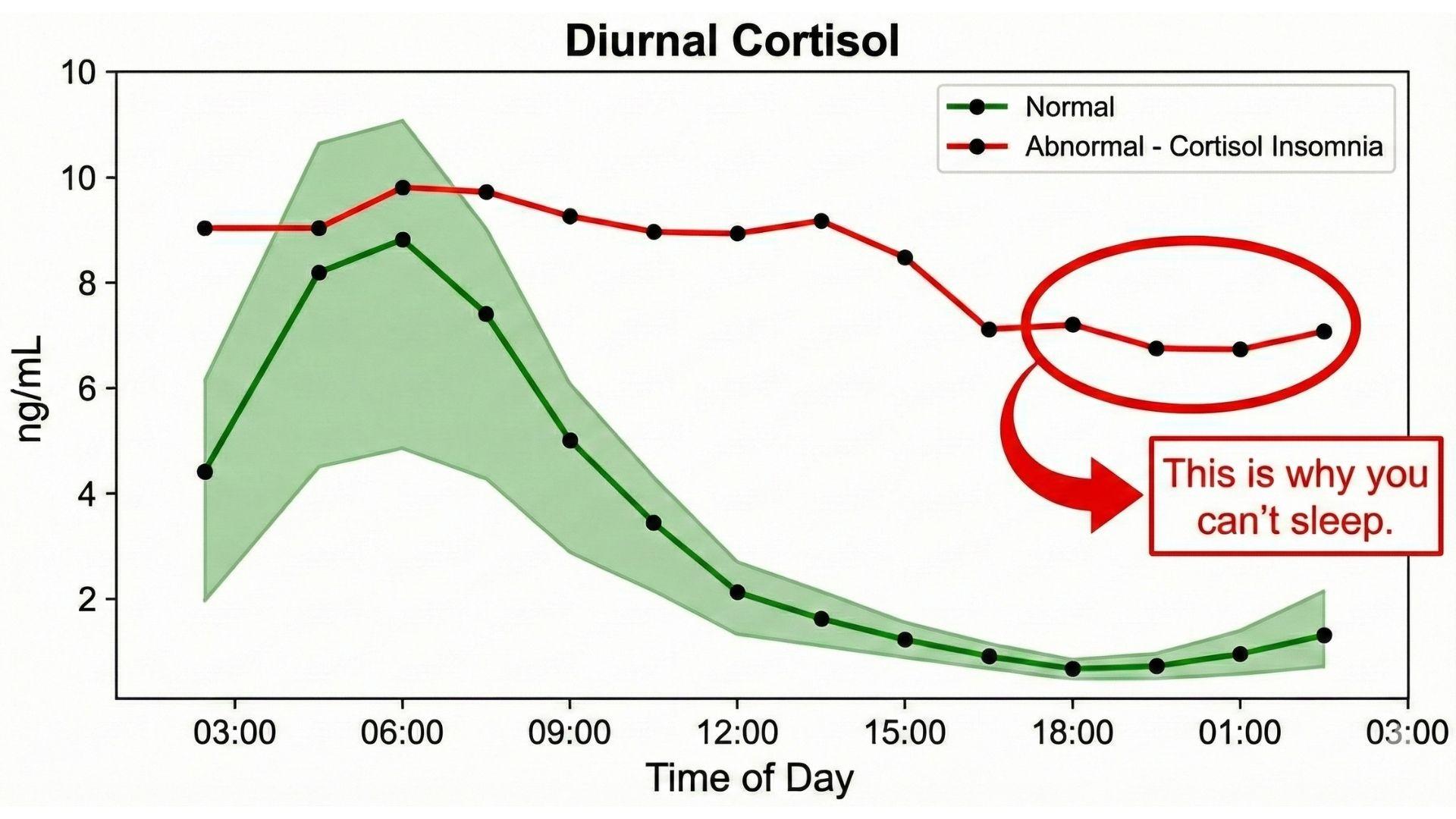
Cortisol is a morning hormone.It’s your body’s internal alarm clock.
-
High in the morning → wakes you up
-
Low at night → allows deep sleep
When cortisol stays high after dark, your body thinks it’s 8 a.m. — even when it’s 11 p.m.
When cortisol stays high at night:
-
Your brain stays alert
-
Deep sleep is blocked
-
You wake up wired — not rested
That’s why:
-
You can’t fall asleep
-
You wake up at 2–4 a.m.
-
You wake up feeling unrefreshed
And why typical “sleep aids” don’t help.
Why Nothing You've Tried Has Worked
Melatonin can’t override cortisol.
Sleep hygiene can’t shut off a stress hormone.
Breathing exercises can’t convince your body it’s nighttime
if your internal alarm clock says otherwise.
You can’t out-will biology.
Most doctors only look at cortisol levels.
But insomnia like this is about cortisol timing.
So labs come back “normal.”
And you’re sent home… still not sleeping.
This Is Where Martin Clinic Is Different

...Since 1911
For over a century, Martin Clinic worked with real patients.
Not trends.
Not theories.
Not one-size-fits-all advice.
Women who said:
“I’m exhausted… but I can’t sleep.”
“I wake up at the same time every night.”
“My labs are normal, but something is wrong.”
What we saw, over and over again, was this:
When you don’t fix cortisol timing…
you don’t fix sleep.
We don’t treat insomnia as a “sleep problem.”
We treat it as a hormone rhythm problem.
Because until cortisol shuts off at night…
Your brain can’t rest.
Your nervous system can’t relax.
And sleep will always feel just out of reach.
If This Page Feels Like It's Reading Your Mind
That’s not an accident.
Thousands of people have described hormonal insomnia the exact same way you just read it.
And the relief often starts with one simple realization:
You’re not broken. Your rhythm is.
And rhythm problems can be fixed.
Not by forcing sleep.
But by helping cortisol do what it was always meant to do…
Wake you up in the morning — not the middle of the night.
Cortisol Reducing Supplement That Helps You Sleep Through the Night
Developed in a real clinic for people with "normal labs" and broken sleep.
⭐⭐⭐⭐⭐
TRUSTED BY 142,256+ CUSTOMERS!
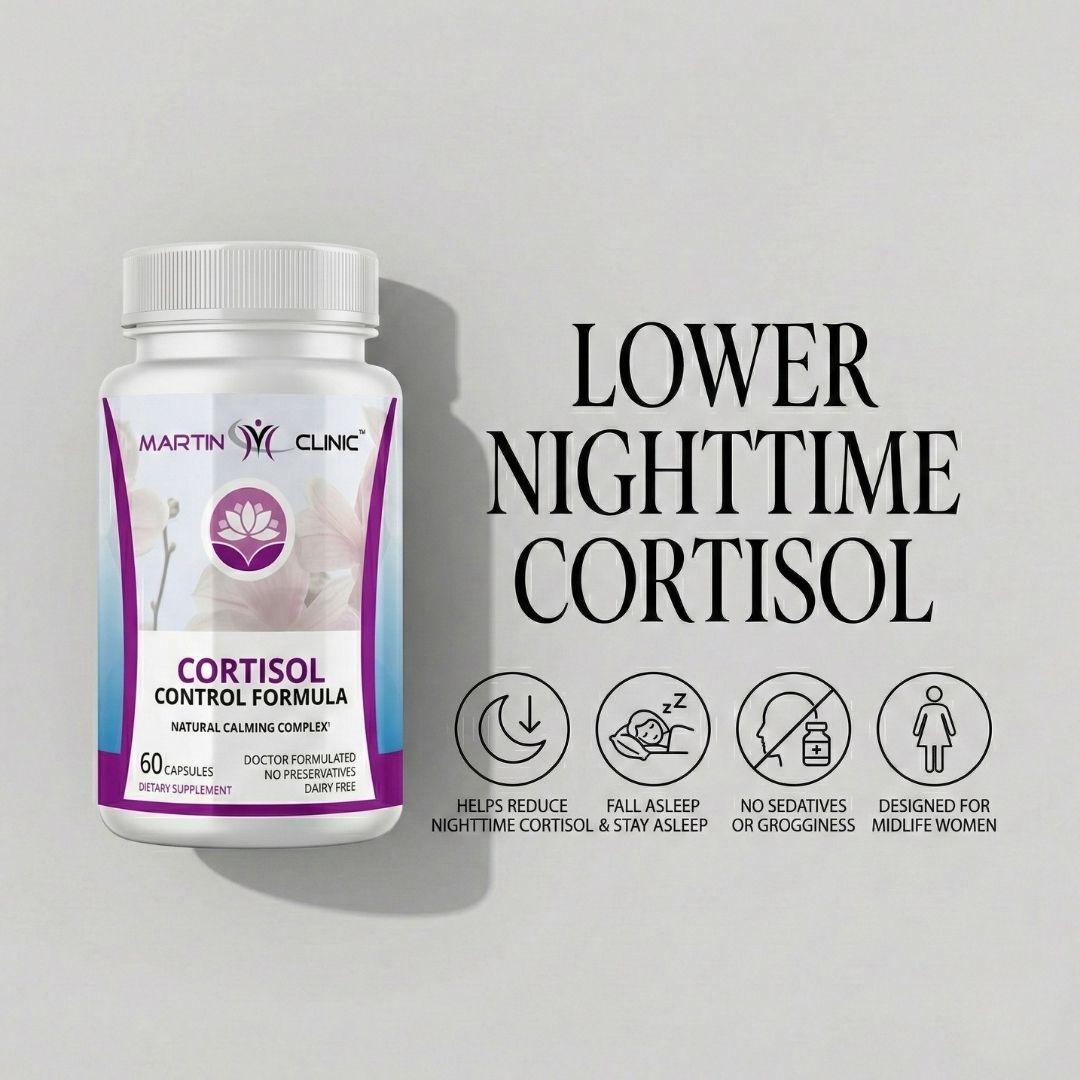
This Is For the Woman Who...
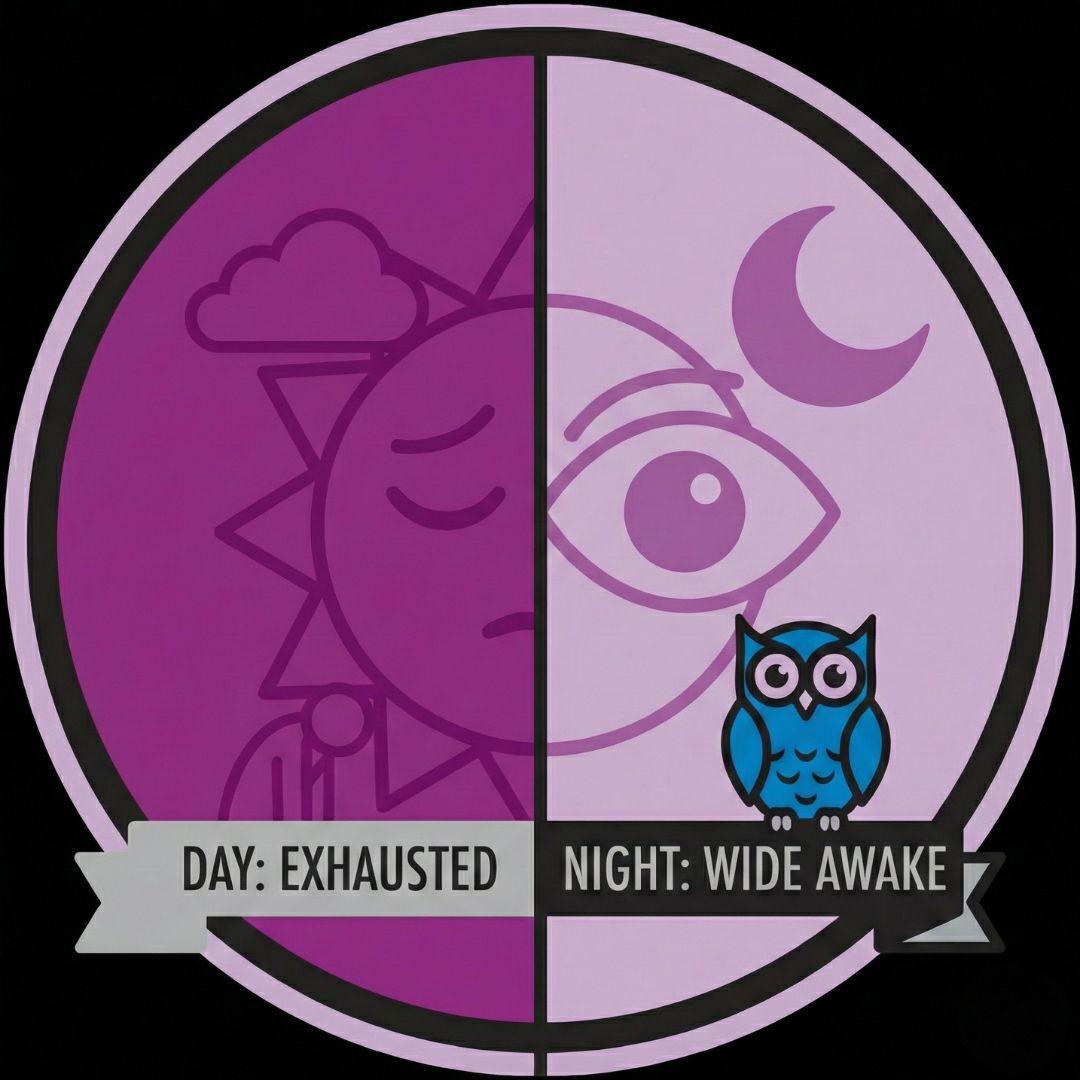
You’re exhausted all day but wide awake at night
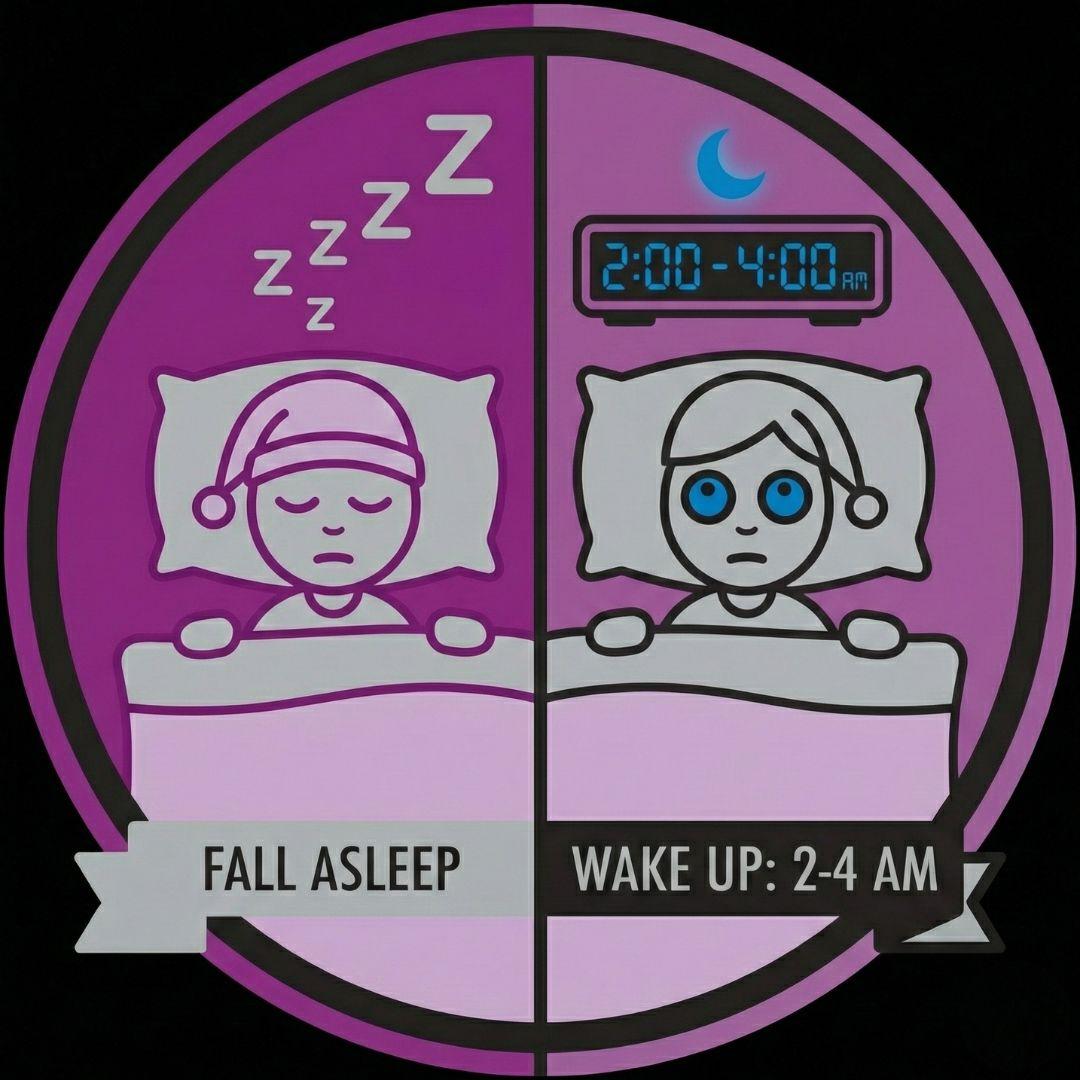
If You fall asleep, You wake up at 2–4 AM
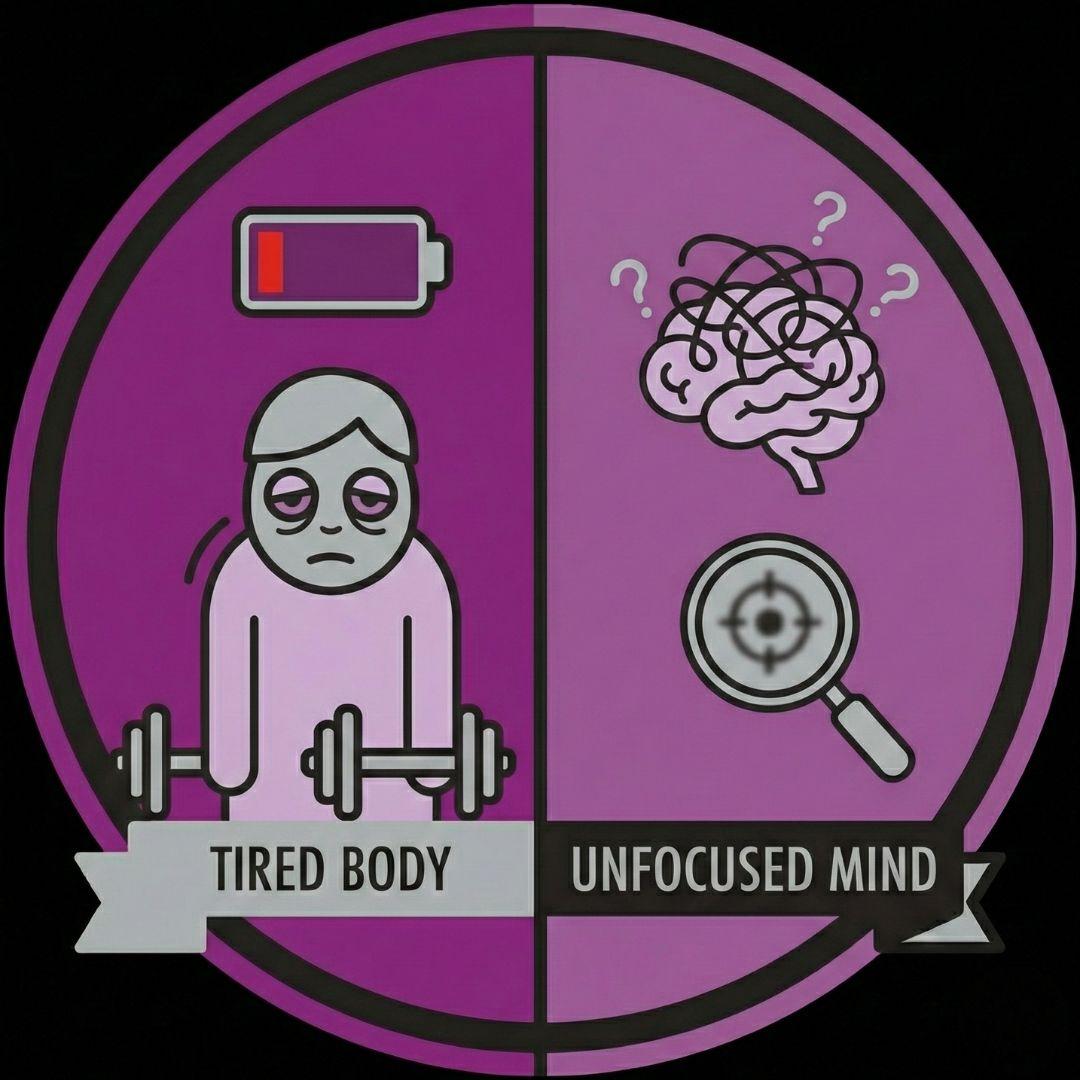
Your mind feels unfocused when your body is tired
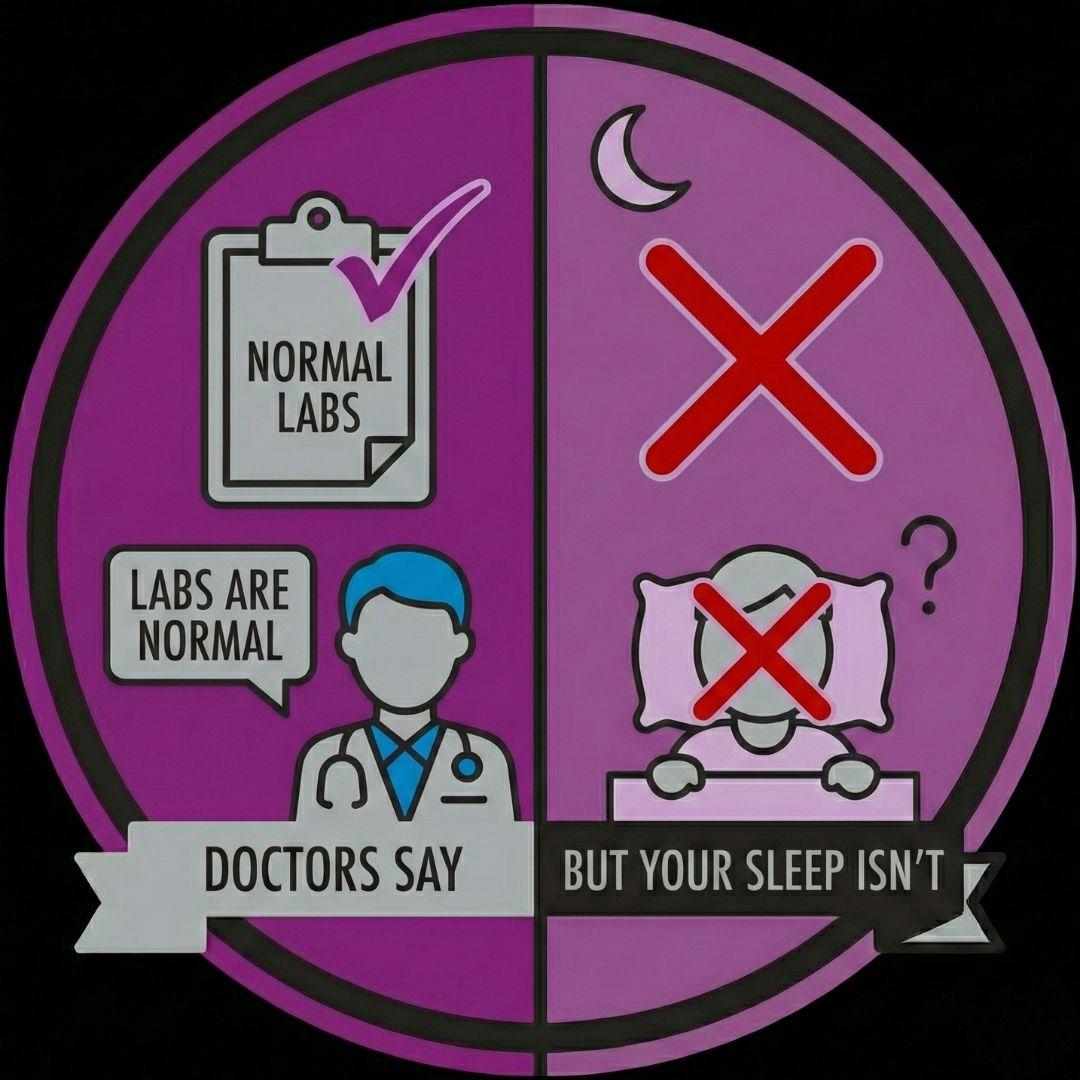
Doctors say your labs are "normal", but your sleep and energy isn't
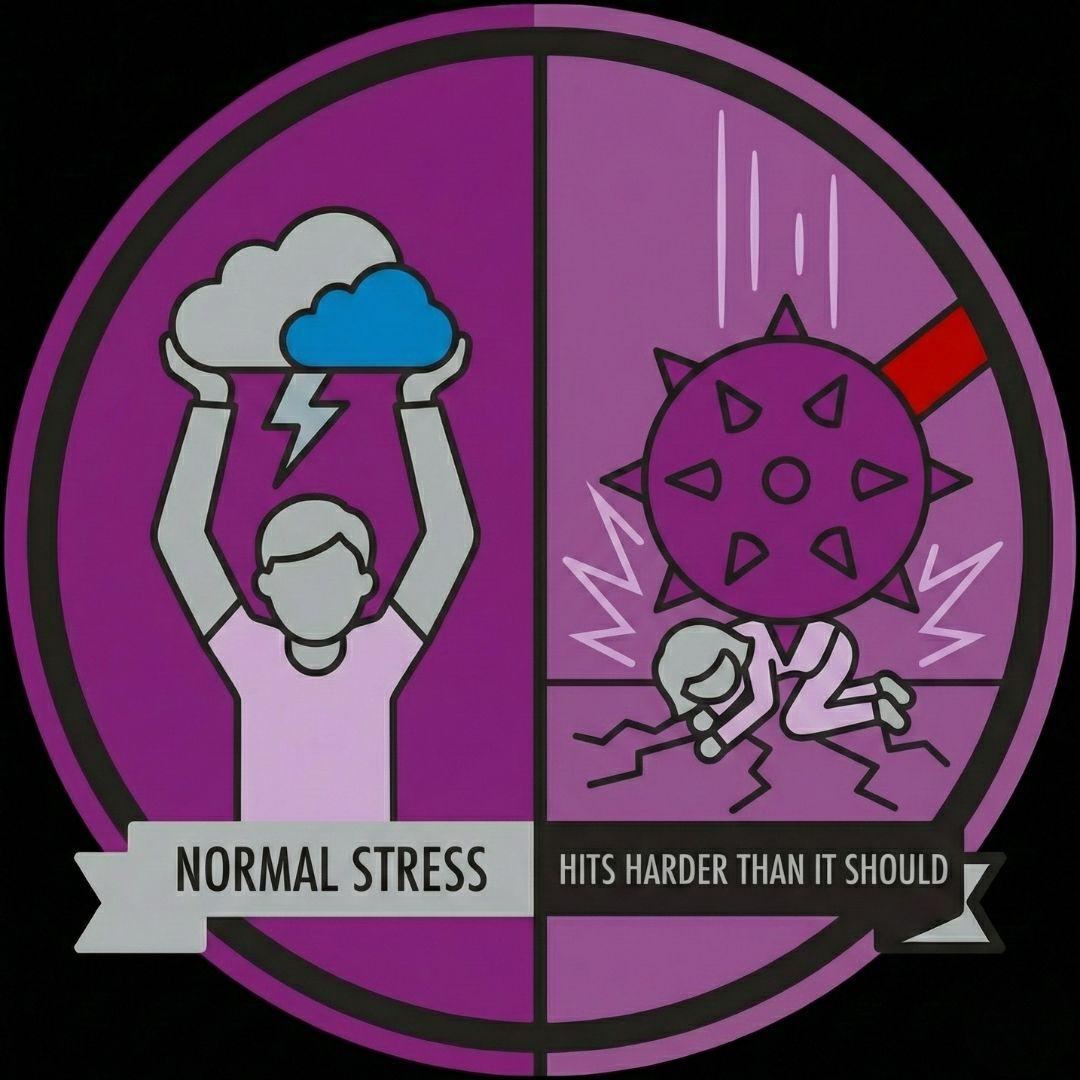
Stress hits harder than it should
What Makes Cortisol Control Different
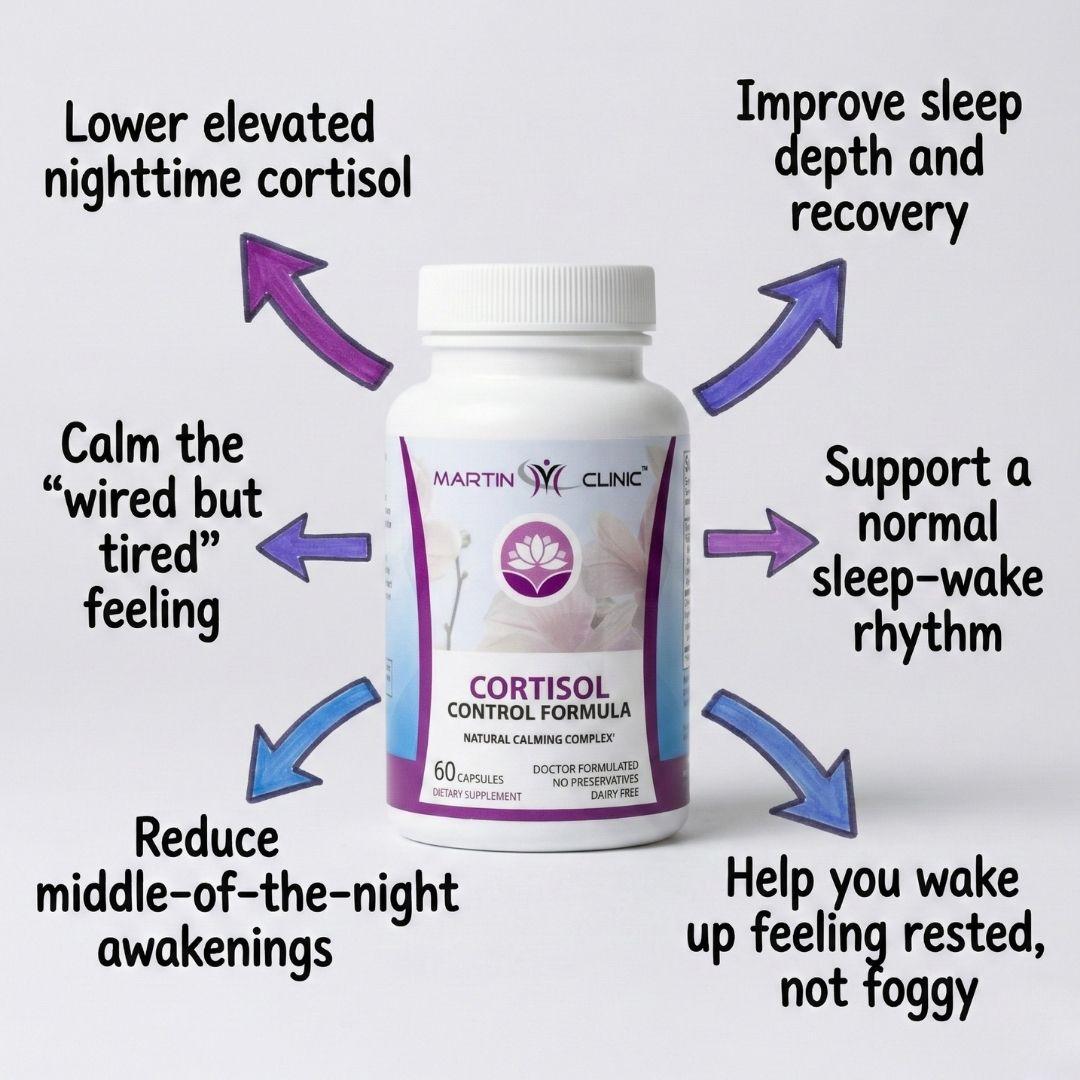
Cortisol Control isn’t a sedative.
It doesn’t knock you out.
It doesn’t force sleep.
Instead, it works upstream — by helping reduce elevated nighttime cortisol so your body can do what it’s meant to do naturally.
Cortisol Control Helps:
-
Lower elevated nighttime cortisol
-
Calm the “wired but tired” feeling
-
Reduce middle-of-the-night awakenings
-
Improve sleep depth and recovery
-
Support a normal sleep–wake rhythm
-
Help you wake up feeling rested, not foggy
You don’t feel drugged.
You don’t feel groggy.
You just… sleep.
Designed Specifically For Midlife Women
This formula wasn’t built for biohackers.
It wasn’t built for sleep-score optimizers.
It was built for women who are:
-
Peri-menopausal or menopausal
-
Burned out but wired
-
Emotionally exhausted
-
At their wits’ end
Women we’ve seen — by the thousands — inside our clinic for decades.
✓ 60 day money back guarantee
What You'll Notice First

Most women tell us they notice:
-
A quieter mind at night
-
Less tossing and turning
-
Longer stretches of uninterrupted sleep
Not because they were “knocked out” —
But because their body finally got the signal that nighttime is for rest.
Why Cortisol Control Works When Everything Else Failed
Most supplements are created by marketers who've never met the people who take them.
Dr. Martin created Cortisol Control in a clinic. For real patients. Over 45 years.
If it didn't work, he'd know. The next week. Face to face.
So he tested. Adjusted. Refined. For decades.
Not on a focus group. On 100,000 real patient visits.
You don't hire a skydiving instructor who's only read about it.
You don't hire a Sherpa who's never climbed the mountain.
And you don't trust your health to a supplement designed by someone who's never looked a patient in the eye.
Cortisol Control was built in the trenches. Not in a boardroom.
That's why it works.
Simple. Focused. No Guesswork.
This isn’t a “balance everything” blend.
This isn’t a kitchen-sink formula.
It’s built around one job:
Help reduce cortisol so sleep can happen naturally.
That’s it.
✓ 100% money back guarantee
100% Risk-Free Guarantee
And yes — Cortisol Control comes with a 100% risk-free money-back guarantee.
Because it’s already helped thousands of women just like you sleep again...
And if it doesn’t help you, you shouldn’t pay for it.
If This Sounds Like You - This Is Your Next Step
You don’t need another bedtime routine.
You don’t need another lecture.
You don’t need to “try harder.”
You need the right support for the right problem.
Cortisol Control was created for women who are:
-
Exhausted all day
-
Wired at night
-
Tired of being dismissed
-
Ready for something that finally makes sense
This is the same formula we’ve relied on for years inside our clinic — refined into a simple, focused supplement designed to support normal nighttime cortisol so sleep can happen naturally.
The Only Cortisol Reducing Supplement Built on 100,000+ Real Patient Visits.
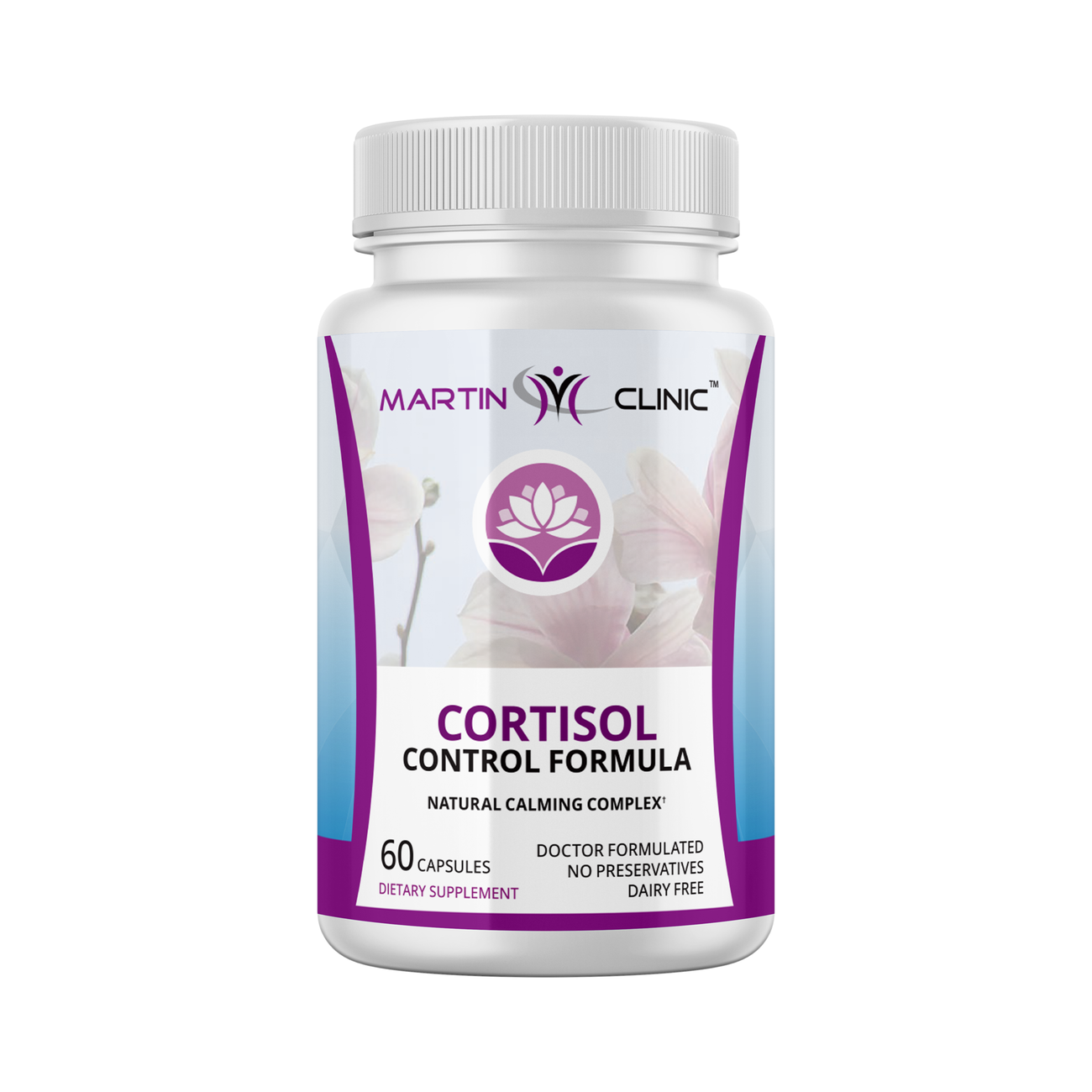
Cortisol Control
Helps calm the stress hormone that runs the whole show.
- ✓Helps support a healthy cortisol rhythm, high in the morning, low at night
- ✓Helps you fall asleep and stay asleep, especially the 3 AM wake-up
- ✓Helps calm the "wired but tired" feeling
- ✓Helps support steady energy, mood, and focus
- ✓Helps your body handle everyday stress
- ✓Take it in the morning for stress, or an hour before bed for sleep
✓ Free shipping over $100✓ 60-day money-back guarantee
Pairs Well With
Navitol Ultra Strength
$49.00
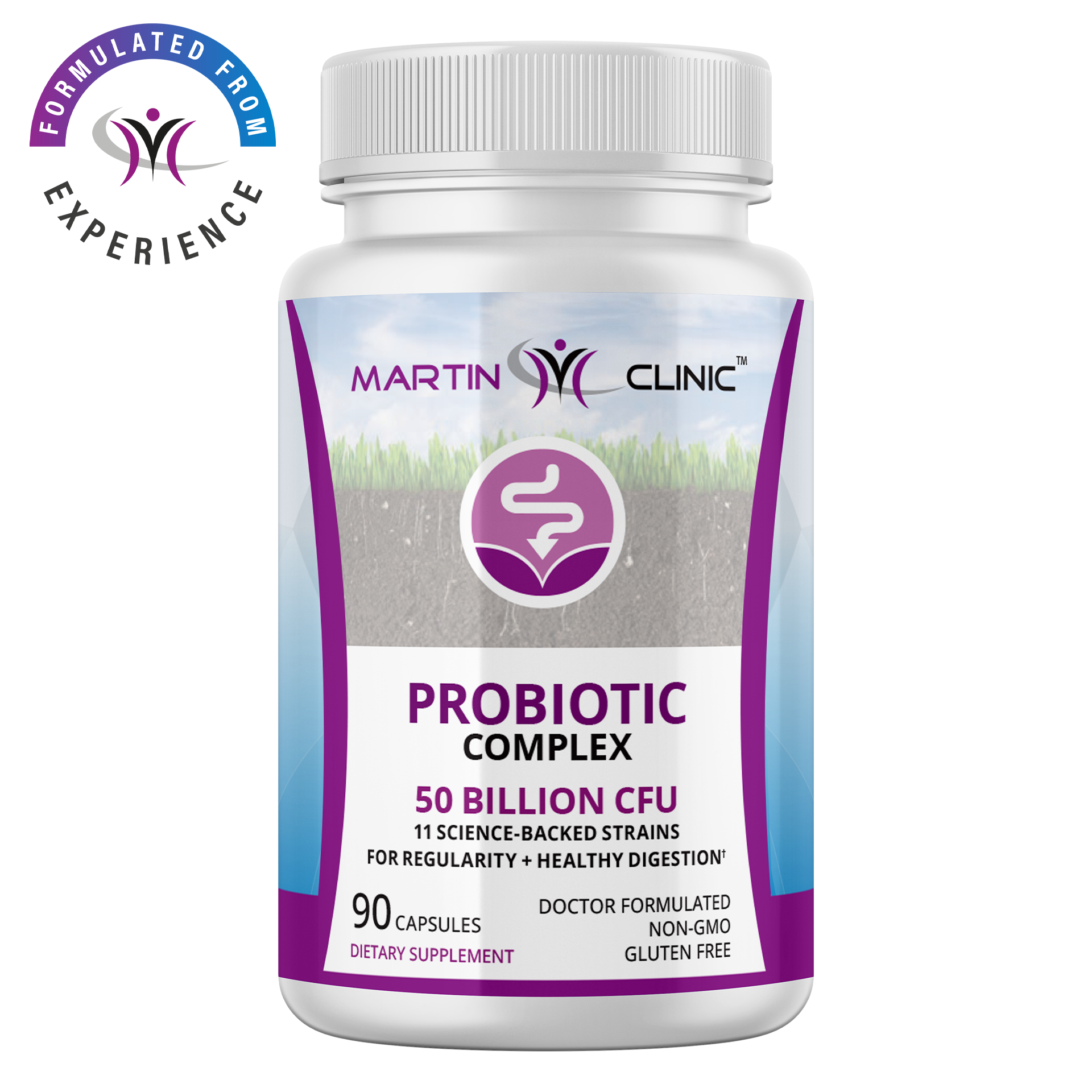
Probiotic Complex
$49.00
Dr. Martin Answers the Most Common Questions About Insomnia
Why This Formula Exists
Martin Clinic didn’t create Cortisol Control as a trend product.
It was developed after decades of working with patients who said:
“I’m exhausted… but I can’t sleep.”
Instead of masking symptoms, we addressed the hormone rhythm underneath them.
That’s why this formula exists.
How to Take Cortisol Control
You Don't Need to Push Through Another Night
If your body thinks it’s morning at 3 AM, sleep will always feel out of reach.
Help cortisol do what it was designed to do.
Fix My Sleep Rhythm
*These statements have not been evaluated by the Food and Drug Administration. This product is not intended to diagnose, treat, cure, or prevent any disease.
Customer Reviews


Cant sleep without it
I am greatful for your product is now in the US .
It calms me better that the other I was taking do not like the synthetic drugs
After trying for several years to find a sleep aid, turn everything, and I mean everything, cortisol control has finally done the trick!
seems to be working along with the Martin products feeling more pepping
I love that i feel in control again! Thanks, Pamela 😊
Page Citations:
1. L-Theanine:”Psychotropic effects of L-theanine and its clinical properties: From ..." ScienceDirect. Available at: https://www.sciencedirect.com
"l-Theanine reduces psychological and physiological stress responses ..." ScienceDirect. Available at: https://www.sciencedirect.com
2. Phosphatidylserine:”The effects of phosphatidylserine on endocrine response to ..." PubMed. Available at: https://pubmed.ncbi.nlm.nih.gov
"The Influence of Phosphatidylserine Supplementation on Mood and Heart ..." Tandfonline.com. Available at: https://www.tandfonline.com
3. Relora® (Magnolia bark extract and Phellodendron bark extract):
"Effect of Magnolia officinalis and Phellodendron amurense (Relora®) on ..." PubMed. Available at: https://pubmed.ncbi.nlm.nih.gov
4. Banaba Extract (Lagerstroemia speciosa):
"Lagerstroemia speciosa (Banaba) leaf extract (18% corosolic acid): Corosolic acid selectively inhibits 11B-hydroxysteroid dehydrogenase 1 (11B-HSD1)..." NHC.com. Available at: https://www.nhc.com
5. Ashwagandha:
"A prospective, randomized double-blind, placebo-controlled ..." PubMed. Available at: https://pubmed.ncbi.nlm.nih.gov
6. Magnolia:
"6 Magnolia Bark Benefits: Dosage & Safety - The Botanical Institute." Botanicalinstitute.org. Available at: https://botanicalinstitute.org
7. Holy Basil (Ocimum tenuiflorum):
"A randomized, double-blind, placebo-controlled trial investigating the effects of an Ocimum tenuiflorum (Holy Basil) extract (HolixerTM) on stress, mood, and sleep in adults experiencing stress." PubMed. Available at: https://pubmed.ncbi.nlm.nih.gov
8. Rhodiola:
"Rhodiola: An Herbal Ally for Balancing Cortisol." Holisticprimarycare.net. Available at: https://holisticprimarycare.net
† STATEMENTS ON THIS WEBSITE HAVE NOT BEEN EVALUATED BY THE FOOD AND DRUG ADMINISTRATION. PRODUCTS ARE NOT INTENDED TO DIAGNOSE, TREAT, CURE OR PREVENT ANY DISEASE.