What nitric oxide does in a woman over 60
Start with what it is, because most people have only ever heard the name.
Dr. Martin on the discovery:
Dr. Martin, The Doctor Is In, Episode 1735It's a molecule called nitric oxide.
He is talking about a molecule you already have, made inside your own body. What it does has a proper name, vasodilation, and his way of explaining that word is to point at nitroglycerin. Think of an explosion, he says. Something opens.
Dr. Martin on where it works:
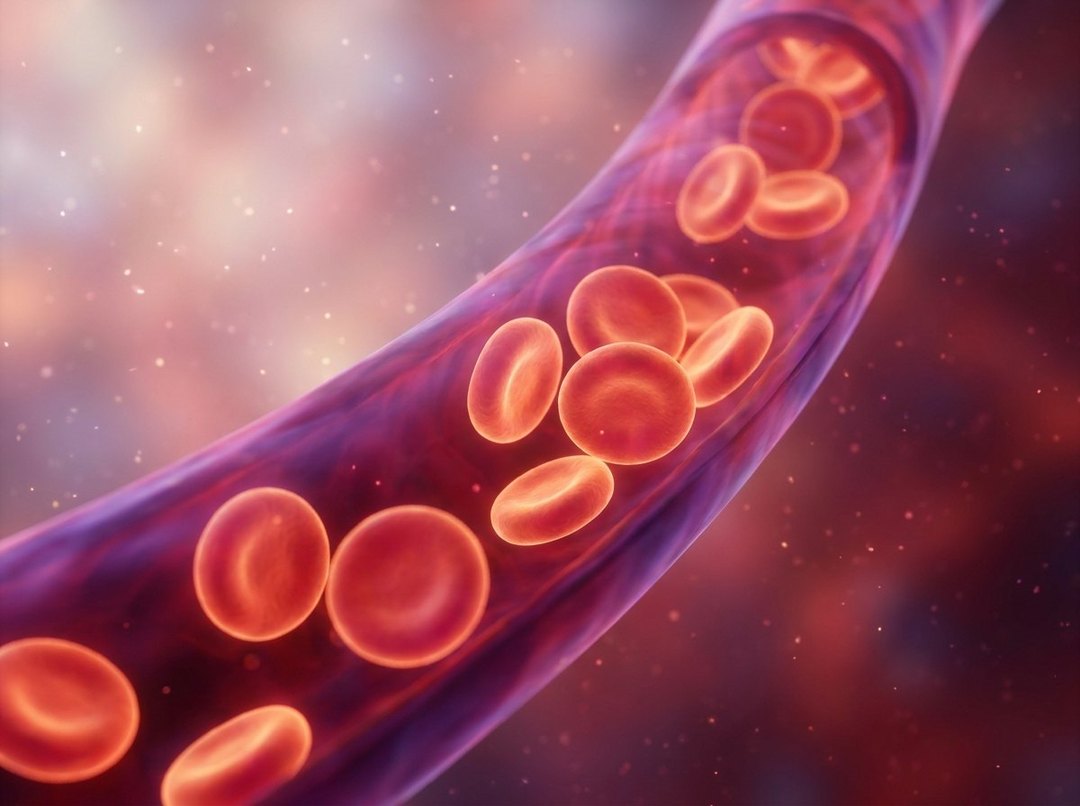
Dr. Martin, The Doctor Is In, Episode 1735A little molecule inside your blood vessels on the lining of your blood vessels that opens up, vasodilates your blood vessels.
That is the answer to what it does for a woman over 60. A vessel that opens delivers. Blood, oxygen and everything travelling in it reach the far end of the line. A vessel that will not open is a delivery problem, and you feel a delivery problem long before anyone calls it anything.
Nothing here is a reason to start or stop anything a doctor has prescribed. Talk to your doctor first.
Where it is made
The lining of a blood vessel has a name, the endothelium. It is one cell thick, it runs the entire length of your circulation, and it is not a passive pipe. It is where the nitric oxide is made.
Which means two things. You are not getting this from a food that contains it, you are getting it because the lining is healthy enough to keep producing it. And whatever damages that lining is, in his framing, the same thing that takes your nitric oxide down with it.
"But one thing we know is that sugar is destructive to nitric oxide."
Dr. Martin, The Doctor Is In, Episode 1735Why it matters more after 60
The vessels that feel it first are the small ones. He calls them the wee blood vessels, and they are the ones furthest from the pump.
That is your hands and your feet, which is why cold hands and cold feet come up so often in this conversation. It is your brain, which runs on a dense network of very small vessels. It is your kidneys. It is the skin on your legs. None of those are places you notice a supply problem as a supply problem. You notice them as being cold, or foggy, or slow.
He also makes the point that women have this blood supply too, because the discovery got famous through men. What they worked out about erectile dysfunction was a nitric oxide story about small vessels, and it turned into an industry. His comment is that the same molecule and the same small vessels belong to everybody, they just never got marketed to women.
The one thing he says destroys it
Here is where the episode goes, and it is not where most circulation advice goes.
Dr. Martin on sugar:
Dr. Martin, The Doctor Is In, Episode 1735And sugar affects your nitric oxide.
His reasoning starts with a word game he likes. Glucose. Split it and there is glue sitting in the middle of it. Sugar is sticky, he says, and he asks you to test that yourself. Spill a sugary drink on the counter and leave it overnight. Drop a soda on the floor. You know exactly what you find in the morning.
Then he turns that on the inside of a blood vessel, and asks why your body works so hard to keep blood sugar in a narrow band.
Dr. Martin on why the body clears it:
Dr. Martin, The Doctor Is In, Episode 1735Your body is dedicated to getting sugar out of the bloodstream because your body knows, and you guys know, that sugar is so destructive to blood vessels.
Super dedicated, is how he puts it. Your body will do a great deal of work to never let sugar sit unattended in the bloodstream. To him, that effort is the evidence. The body does not go to that trouble over something harmless.
It is the same argument he makes about the liver, which is where the overflow ends up. That one is a month of sugar and a fatty liver.
What he has been saying since the 1980s
He puts a date on this, and the date matters because it is not a recent enthusiasm.
He was in school in the 1970s, and he says that back then nobody understood how nitroglycerin actually worked. They knew it worked. Angina is a spasm of the heart from a lack of blood supply, and nitroglycerin relieved it. The mechanism was a blank. Then in the 1980s the work that explained it won a Nobel Prize in medicine, and the answer was this molecule.
Dr. Martin on what he did with that:
Dr. Martin, The Doctor Is In, Episode 1735So immediately I started talking about that and the importance of it and how to elevate your nitric oxide in your body.
Forty years of saying the same thing, on his telling, and he says he has never written a book that did not have the dangers of sugar in it. That is the consistency worth knowing about before you decide what to do with the advice.
How he raises it
Food first, and the food move is a subtraction rather than an addition. If sugar is what tears it down, the first job is taking the sugar out, which is also the cheapest thing on this page.
Movement is the other free one. Walking asks your vessels to open, regularly, which is the demand the lining responds to.
Beyond that his target is the lining itself, and that is what the formula is aimed at. If you want the wider version of this, covering the cold hands and feet end of it, we wrote how to improve circulation after 60 separately. And because most women over 60 have had this conversation as a cholesterol conversation instead, the whole cholesterol thing is a hoax is where he explains why he thinks the blame landed in the wrong place.
None of this is a reason to change anything you have been prescribed for your heart or your blood pressure. It is an explanation of what the molecule does and what he thinks is in its way.
Common questions
What does nitric oxide do?
It vasodilates. In his words, it opens up your blood vessels, and it does that from the lining of the vessel itself.
Is nitric oxide good for older women?
He treats it as central to circulation, and circulation is one of the things that changes with age. He is explicit that the blood supply he is describing belongs to women as much as men.
What destroys nitric oxide?
Sugar. He says plainly that sugar is destructive to nitric oxide, and he repeats it as sugar affects your nitric oxide.
Where is nitric oxide made?
On the lining of your blood vessels, the endothelium. It is made in the vessel wall rather than delivered to it.
How do you increase nitric oxide?
He has been talking about elevating it since the 1980s, and the first move is getting the sugar out, because that is the thing he says is tearing it down.
Read next: Is Nitric Oxide Safe After 60? and How To Improve Circulation After 60.
Work on the blood flow
Martin Clinic's Navitol Ultra Strength is the formula he built around this, for the thing he says sugar spends its day undoing.
60-day money-back guarantee.These statements have not been evaluated by the Food and Drug Administration. This product is not intended to diagnose, treat, cure, or prevent any disease. Always consult your healthcare practitioner before starting a new supplement, especially if you are pregnant, nursing, taking medication, or have a medical condition.