The two kinds of inflammation after 60
He opens with the line they use at the clinic whenever the subject comes up.
Dr. Martin on where inflammation comes from:
Dr. Martin, The Doctor Is In, Episode 1543There's always reasons for inflammation.
That is the whole approach in one sentence. If there is always a reason, then the job is to find the reason rather than to chase the symptom around your body.
And then the split, which he says people misunderstand constantly. Acute on one side. Chronic on the other. They are not the same thing with different severity, they are two different situations.
What acute inflammation is doing
Start with the one that is on your side, because most people over 60 have been told to be afraid of all of it.
You fall. You bang your knee, you bang your elbow, and it swells. That, he says, is the body's ambulance system. It is normal, and there is nothing wrong with it. It is actually good for you.
Same with a cold. Headache, sinus pain, a fever, feeling terrible.
Dr. Martin on acute inflammation:
Dr. Martin, The Doctor Is In, Episode 1543Well, that's inflammation guys, but that inflammation's on your side, it helps.
He goes as far as defending the fever, which most people reach for something to stop. The fever is good for you, he says, because it is heating your body up to kill the virus. That is your immune system working, not your immune system failing.
Nothing here is a reason to start or stop anything a doctor has prescribed. Talk to your doctor first.
When it becomes the enemy
The line he draws is not about how much. It is about whether it ever stops.
Dr. Martin on the difference:
Dr. Martin, The Doctor Is In, Episode 1543Where inflammation is not good is when it becomes chronic.
With a cold, the ambulance system sends in more enzymes, does the work, and then switches off. The question he asks is what happens if it does not get turned off. He points at autoimmune conditions as the example where inflammation stays switched on and the body ends up working against itself.
At that point, in his words, inflammation becomes your enemy. And the thing about the chronic kind is that it is quiet. There is no swelling to look at and no fever to take. It is low grade, which is precisely why it runs for years before anybody names it.
The three causes he looks at
Asked whether chronic stress causes inflammation, he does something unusual. He declines to overclaim.
Dr. Martin on causes:
Dr. Martin, The Doctor Is In, Episode 1543I don't know if it's an actual cause because what I look at in causes of inflammation is insulin, insulin resistance, leaky gut.
Stress, on his description, pours gasoline on inflammation through cortisol. It makes the fire bigger. Whether it lit it is a different question, and he says he does not know.
What he does put on the list is three things. Insulin. Insulin resistance. And leaky gut, which he describes as garbage getting into the bloodstream that does not belong there. Free radical damage sits with them.
Notice all three are upstream of how you feel. None of them is a sore knee. This is the same stream he traces for joints, for the thyroid and for circulation, which is why his answers to very different questions keep arriving at the same place.
Why age adds to it
Here is his reason this conversation is different at 65 than it was at 35.
Dr. Martin on aging:
Dr. Martin, The Doctor Is In, Episode 1543When the body is aging, oxidation is occurring at a high rate that creates inflammation, okay?
Oxidation is wear. It is the same process that rusts metal and browns a cut apple, running inside a body that is doing more of it than it used to and clearing it more slowly than it used to.
That is not a reason to accept it as your age. It is his reason for saying the inputs matter more now, not less, because you are starting from a higher baseline than you were.
Where the gut comes in
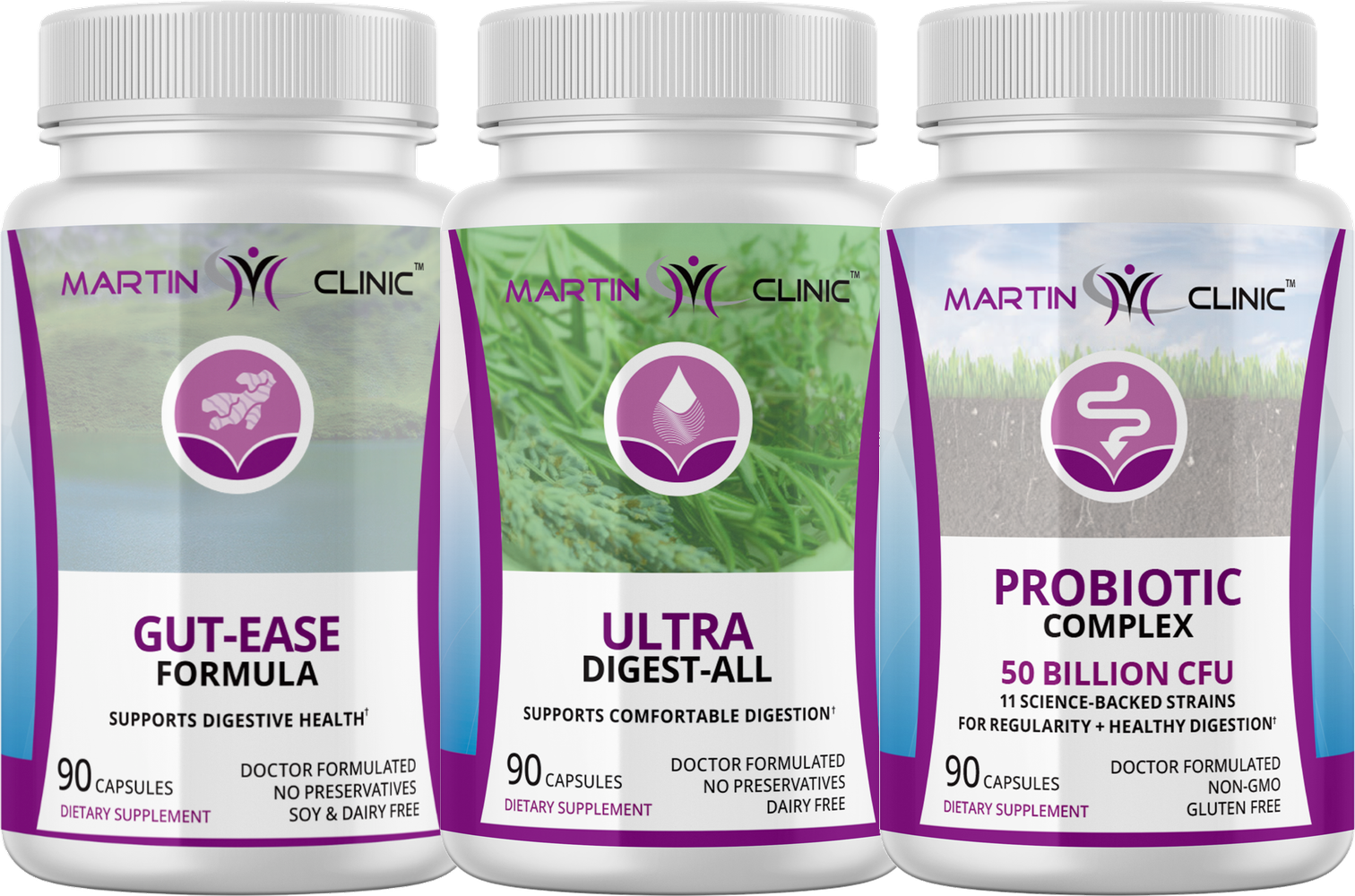
Of everything on his list, the gut is the one he keeps coming back to. One of the biggest problems in inflammation, he says, is the gut.
And he adds a warning that matters for women who have already ruled this out. You can have leaky gut with no digestive symptoms at all. Plenty of people tell him their bowel is fine, they are regular, no bloating, no gas, no pain, so it cannot be the gut. His answer is that the absence of digestive symptoms does not settle it.
That argument, in full, is all disease starts in the gut. And if your inflammation shows up as sudden attacks in a joint rather than as a low hum, red meat and gout is the one to read.
What he reaches for
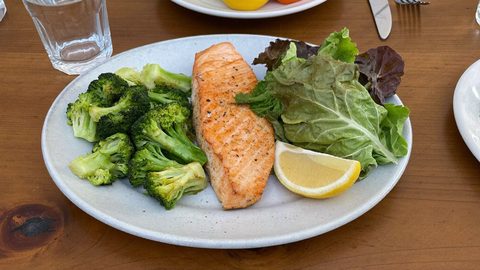
Food first, and the food he names here is specific. Sun, vitamin D, steak. He wants you thinking about L-glutamine and omega-3 when the subject is inflammation, and he says as much as possible go natural.
Dr. Martin on omega-3:
Dr. Martin, The Doctor Is In, Episode 1543That's why I love high DHA because it is a long chain fatty acid that is so bioavailable, so anti-inflammatory.
He calls it a lube job. Skin, eyes, blood vessels, joints, and the gut, where he says omega-3 helps repair the intestinal lining. Bad oils pour gasoline on the fire and good oils put it out, is how he frames the choice. He puts water on that list too.
If you want the version of this aimed squarely at women over 60, we wrote what causes inflammation in women over 60 separately.
Nothing on this page is a diagnosis, and nothing on it is a reason to stop anything you have been prescribed or to leave a fever unattended when it needs looking at.
Common questions
Is all inflammation bad?
No. He says acute inflammation is on your side and it helps. A banged knee or a cold brings inflammation because the body sent it.
What is chronic inflammation?
The low grade kind that does not go away. On his line, where inflammation stops being good is when it becomes chronic.
What causes chronic inflammation?
The three he names as what he actually looks at are insulin, insulin resistance and leaky gut. He puts chronic stress alongside them as something that pours gasoline on it.
Does inflammation get worse with age?
He says that when the body is aging, oxidation is occurring at a high rate and that creates inflammation. So yes, on his reading age adds to it.
What helps chronic inflammation?
He says he loves high DHA, because it is a long chain fatty acid that is bioavailable and anti-inflammatory, and he puts the food side alongside it.
Read next: Knee Pain After 60: What Is Wearing The Joint Down and Inflammation In Women Over 60: Dr. Martin On Curcumin.
Put the fire out
Martin Clinic's DHA Upgraded is the high DHA omega-3 he is describing here, the long chain fatty acid he says he loves for exactly this job.
60-day money-back guarantee.These statements have not been evaluated by the Food and Drug Administration. This product is not intended to diagnose, treat, cure, or prevent any disease. Always consult your healthcare practitioner before starting a new supplement, especially if you are pregnant, nursing, taking medication, or have a medical condition.