Why UTIs get more common after 60
Plenty of women go decades with the odd bladder infection and then, after menopause, they start arriving every few months. Doctors generally point to lower estrogen, thinner tissue and a bladder that may not empty as completely as it once did. Those explanations are real.
Dr. Martin asks a different question: why does it keep coming back after it was treated? On episode 1799 he put recurring UTIs on the same list as chronic sinusitis and psoriasis, things antibiotics set up years down the road. He said he saw tens of thousands of women with it, and his goal with every one was to break the cycle.
The cycle he describes
Here is the sequence, the way he laid it out for patients:
Dr. Martin, The Doctor Is In, Episode 1799You got a urinary tract infection. You took an antibiotic and you didn't know this, but a yeast, the invasion of the army went to your bladder and it now is coating your bladder. It loves moisture.
The army is one he describes on almost every episode. Your gut holds a war between good and bad bacteria. When the good side is wiped out, he says, a third army moves in: yeast, Candida albicans. He calls it the Trojan horse, and it goes to the moist places in the body.
An antibiotic, in his words, carpet bombs the microbiome. It does not pick and choose. It kills the bacteria causing the infection, and it kills the friendly bacteria that were keeping yeast in check. That, in his view, is the opening the yeast was waiting for.
"The bladder is a perfect place for it to set up shop."
Dr. Martin, The Doctor Is In, Episode 1799Why the bladder
His explanation for where the yeast ends up is simple, and he uses the same picture every time. Yeast and mold are first cousins. Think about where you find mold in a house: the bathroom, or the basement where water came through. Yeast goes looking for the same conditions in the body.
Dr. Martin, The Doctor Is In, Episode 1799Well, yeast is a cousin, first cousin. It loves moisture. The bladder is a perfect place for it to set up shop.
So the antibiotic cleared the infection, the friendly bacteria went with it, and the yeast moved into the bladder lining. The bacteria come back because the lining they sit on is now coated, and the woman is handed another prescription. Each round, in his reading of it, makes the next one more likely.
Dr. Martin, The Doctor Is In, Episode 1799It's going to reoccur because in the lining of your bladder, you are setting up a fungus, a yeast, and you're going to have one reoccurrence after another reoccurrence.
The bacteria in the urine test are present, he does not argue that. What he argues is that they are not the whole story, and treating only them keeps the cycle turning.
He is not against antibiotics
This is the part people get wrong about him, so it is worth hearing him say it before anything else.
Dr. Martin, The Doctor Is In, Episode 1799I am one of the biggest fans of antibiotics. If you need one, save millions of people's lives. The problem is, it carpet bombs your microbiome.
His issue is with how they are used. The instruction most of us were given is to finish every pill in the bottle. He says that advice was never built on science, and that the research has since come around to his side of it.
Dr. Martin, The Doctor Is In, Episode 1799You take an antibiotic until the major symptoms go away and then you stop it. And science agrees with that.
That is his position, and how long you take any prescription is a conversation to have with the doctor who gave it to you. His point is that less exposure means less damage to the friendly bacteria, and less room for yeast.
A test result with no pain
One situation bothered him more than any other. A woman comes in and mentions she is on antibiotics for a urinary tract infection. He asks if it is painful. No, she says, but the test showed leukocytes in her urine, so her doctor put her on them.
He says he wanted to scream. No pain, and she is killing off her friendly bacteria for a number on a test. Mainstream guidelines lean the same way: bacteria in the urine of an older woman with no symptoms is common and not usually treated. His advice was direct.
Dr. Martin, The Doctor Is In, Episode 1799Look, if you got no pain, don't even take it. Just load yourself up with probiotics, friendly bacteria that'll keep your yeast at bay and don't feed it.
If you do have burning, pain or a fever, that is a different situation, and an infection that reaches the kidneys is serious at any age. See your doctor. What he is talking about is the prescription written for a lab result alone.
How he breaks the cycle
His plan has two parts, and both come straight out of how he sees the cycle working.
Put the friendly bacteria back. If an antibiotic stripped them away, he wants them replaced. More friendly bacteria means less room for yeast. His line on any antibiotic, for any infection, is that you better replace what it took. More on what he looks for in one is in the best probiotic for a woman over 60.
Stop feeding the yeast. This is the part most women have never been told. Yeast eats one thing.
Dr. Martin, The Doctor Is In, Episode 1799Yeast has a one track mind, guys. Feeds on sugar. It don't feed on anything else. Okay? Yeast needs sugar.
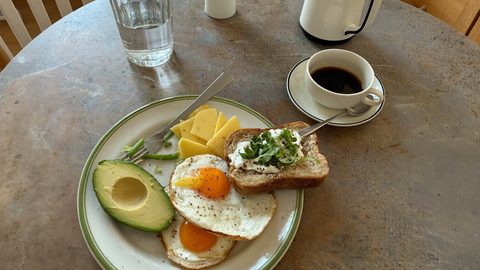
That means the obvious sugar, and also the cereal, bread and juice that turn into sugar quickly. Eggs, meat and cheese, the foods he builds his own plate around, give it nothing to work with. He also points out that leaky gut often comes with no digestive symptoms at all. For the bigger picture, start with all disease starts in the gut, and for whether an older woman really needs a probiotic at all, do seniors need probiotics.
Common questions
Why do older women keep getting UTIs?
Doctors point to lower estrogen and changes in the bladder after menopause. Dr. Martin adds a cycle: each antibiotic wipes out friendly bacteria, yeast settles in the moist bladder lining, and the infection keeps coming back.
Does Dr. Martin say never take an antibiotic for a UTI?
No. He calls himself one of the biggest fans of antibiotics when you need one. He wants them taken until the major symptoms go and then stopped, with probiotics alongside.
What if my urine test is positive but I have no pain?
His advice in that situation was not to take the antibiotic, and to load up on probiotics and stop feeding yeast instead. Talk it through with your own doctor before changing any prescription.
Does sugar make UTIs worse?
In his view, yes, because yeast feeds on sugar and nothing else. Cutting sugar and fast carbohydrates is half of how he breaks the recurring UTI cycle.
Put the friendly bacteria back
His answer to the woman with no pain was to load up on probiotics, friendly bacteria that keep yeast at bay. Martin Clinic's Probiotic Complex is the formula he built for that job.
60-day money-back guarantee. Formulated in clinic.These statements have not been evaluated by the Food and Drug Administration. This product is not intended to diagnose, treat, cure, or prevent any disease. Always consult your healthcare practitioner before starting a new supplement, especially if you are pregnant, nursing, taking medication, or have a medical condition.