
The question he gets every week
Dr. Martin opens this episode by saying he sees the same question once or twice a week. Doc, how come I am not losing weight? I am eating well. Some of the people asking are even on his metabolic reset, the 30 days of eggs, meat and cheese.
He is quick to point out that the reset was never built as a weight loss plan. He started it for patients with type 2 diabetes, people who needed to learn that they and carbohydrates do not get along. His clinic also ran a weight loss department for years, weighing people every week. So when he talks about what derails weight loss, he is talking from what he saw in that room.
His short answer to the question is that there are roadblocks, and some people have more of them than others. He names four.
Saboteur one: your hormones
This is the one he puts at the top of the list, and he is blunt about why men tend to have an easier time.
Dr. Martin, The Doctor Is In, Episode 1468Hormones are the number one reason people don't lose weight as rapidly as someone else.
His explanation runs through the thyroid. A woman's ovaries release estrogen and progesterone, and those two hormones act directly on the thyroid, which he calls your gas pedal. When estrogen gets ahead of progesterone, which he says can happen in perimenopause and in menopause, the thyroid slows down. He says he has never seen it go the other way.
That is why so many women over 60 tell him they gain weight around the hips just by looking at food. He wants you to hear that this is not a character flaw.
Dr. Martin, The Doctor Is In, Episode 1468And don't beat yourself up. That can sabotage your weight loss. And you have to understand that. And that doesn't mean you quit.
He goes straight on to say that hormones can be fixed. The point of naming the saboteur is so you stop blaming yourself and start working on the cause.
He is also critical of how the thyroid gets checked. Doctors, he says, got hijacked by the TSH test and its wide normal range. He is not telling anyone to skip the test. He is asking them to listen to the woman in front of them: can't lose weight, losing hair, dry skin, thinning eyebrows, cold all the time. If it walks like a duck, he says, it is a duck. There is more on that in thyroid symptoms in women over 60, and on the estrogen side in estrogen dominance after 60.
Saboteur two: fuel, not calories
The second saboteur is metabolic, and it is where he parts company with the advice most women over 60 have heard all their lives.
Dr. Martin, The Doctor Is In, Episode 1468But weight loss is not calories in and calories out. It's not calories, it's fuel.
Your mitochondria, the battery packs inside your cells, run on whatever fuel you give them. Give them sugar and they will run, he says, but they will sputter. He compares it to putting regular gas in a jet, or in the turbo engine a dealer once warned him needed high octane fuel or it would be ruined.
He says he spent years undoing the eat less, move more message with his patients, on his radio show and in his books. That message makes weight gain your fault. It never takes hormones or fuel into account. Change the fuel, he says, and your body focuses on losing fat rather than muscle, which is what healthy weight loss looks like.
"It's not calories, it's fuel."
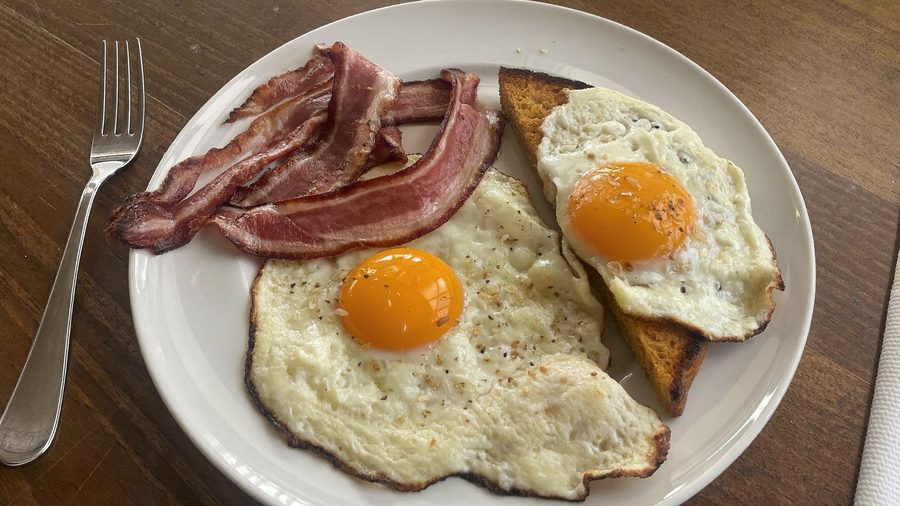
Dr. Martin, The Doctor Is In, Episode 1468For him the better fuel is protein and fat the way it comes in nature. Eggs, steak and dairy top his list, with butter, cheese and cream rather than milk.
Dr. Martin, The Doctor Is In, Episode 1468If you focus in on protein and fat in nature the way it's supposed to be, eggs are the best food in the world besides steak.
If your blood sugar has been creeping up as well, the same fuel problem sits underneath it. He covers that in insulin resistance in women over 60.
Saboteur three: cortisol
The third one he calls emotional, and the hormone behind it is cortisol, your stress hormone.
Dr. Martin, The Doctor Is In, Episode 1468Cortisol elevates your blood sugar even without eating.
In a woman, he says, cortisol does more than that. It robs progesterone, which lets estrogen take off, which slows the thyroid down. That is how stress ends up as fat around the belly and the hips, and why you can feel like you gain weight by looking at food.
He says that in all his years in practice he never saw as much high cortisol as there is today. His first move is a simple one.
Dr. Martin, The Doctor Is In, Episode 1468Again, the low hanging fruit to help cortisol is getting a good night's sleep.
Poor sleep raises cortisol, and high cortisol ruins sleep. Once you are in that loop, he says, it becomes almost impossible to lose weight. The belly side of this is covered in cortisol and belly fat after 60.
Saboteur four: silent inflammation
The last saboteur is inflammation, and he is clear that he does not necessarily mean pain.
Dr. Martin, The Doctor Is In, Episode 1468A lot of people are going around and they have high inflammation in the body, and it's chronic and it's silent.
These are often people who are simply tired. Because nobody is testing for it, it goes unseen. He tells patients to get a CRP test, C-reactive protein, to find out. The usual causes on his list are insulin resistance, which he calls one of the biggest factors, and leaky gut. And cortisol, he says, pours gasoline on it. Put inflammation on top of the other three and weight loss slows to a crawl.
What to do about it
He sums the episode up as four words to write down: hormonal, metabolic, emotional and inflammation. Those are his four saboteurs of weight loss.
In practice that means looking at your hormones and your thyroid symptoms rather than just one lab line, changing your fuel toward protein and fat and away from sugar and processed carbs, protecting your sleep so cortisol can come down, and asking for a CRP test to see whether silent inflammation is part of the picture. And it means not quitting when the scale is slow.
Common questions
Why can't I lose weight after 60 even when I eat well?
Dr. Martin names four saboteurs: hormones, the fuel you burn, cortisol and silent inflammation. For women he puts hormones first, because estrogen dominance slows the thyroid.
Is weight loss after 60 just calories in and calories out?
Not in his view. He says it is not calories, it is fuel. Cells running on sugar sputter, and cells running on protein and fat burn fat rather than muscle.
Can stress stop me losing weight?
He says yes. Cortisol raises blood sugar even without eating, and in women it robs progesterone and slows the thyroid. A good night's sleep is the first thing he reaches for.
Start with the fuel
He says cortisol raises your blood sugar even without eating, and sugar is the fuel that makes your cells sputter. Martin Clinic's Blood Sugar Support Formula is the one he built for the blood sugar side of the picture.
Shop Blood Sugar Support Formula
60-day money-back guarantee. Formulated in clinic.These statements have not been evaluated by the Food and Drug Administration. This product is not intended to diagnose, treat, cure, or prevent any disease. Always consult your healthcare practitioner before starting a new supplement, especially if you are pregnant, nursing, taking medication, or have a medical condition.