Which hormone tests are worth asking for after 60
Start with where he actually stands on testing, because he gets misread on this constantly.
Dr. Martin on blood tests:
Dr. Martin, The Doctor Is In, Episode 1538You know me, I love blood tests and I really like looking at certain biomarkers in blood tests.
He looked at tens of thousands of blood slides over the years and says that when you do that you get really good at it. So this is not an argument against testing. It is an argument about which tests to ask for and what you are allowed to conclude from one.
His two asks for a woman over 60 are specific. A full thyroid panel instead of TSH by itself. And estrogen read against progesterone instead of estrogen alone.
Why TSH alone is not a thyroid read
A listener named Barb asked him how often a thyroid blood test can be wrong. His answer went straight to what gets ordered.
Dr. Martin on the thyroid test:
Dr. Martin, The Doctor Is In, Episode 1538Okay, look, the thyroid test doctors usually rely on TSH unless they do a full panel.
TSH is not thyroid hormone. It is the signal your pituitary sends asking for more, which makes it a measure of the request rather than the delivery. A full panel adds the hormones themselves, T4 and T3, and the antibodies. He says the thyroid has so many strings attached to it that even a full panel takes reading.
That is his whole position on the gland in one line, and the longer version is the thyroid never acts on its own. If it is the number itself you are trying to interpret, we went through that in what is a normal TSH for a 60 year old woman.
Estrogen on its own tells you nothing
A woman named Laurie told him she was still achy and mentioned that her estrogen was going down. He did not accept the premise.
Dr. Martin on hormones:
Dr. Martin, The Doctor Is In, Episode 1538I'm a balancer of hormones and I can tell you my experience is it's never a problem with estrogen going down.
Never a problem, on his experience. Estrogen falling after menopause is expected. It is not the finding.
Dr. Martin on what is:
Dr. Martin, The Doctor Is In, Episode 1538The problem is progesterone and estrogen being balanced when that's out of balance.
Which is why a lone estrogen value is close to useless to him. You can only be out of balance against something. He also points out that the estrogen side is not all coming from you: plastics, pesticides, herbicides, chemicals your body reads as estrogen. Xenoestrogens, he calls them. The longer version of that is what estrogen dominance means after 60.
The questionnaire he made patients fill in
Here is the practical half of it, and it is the part nobody copies.
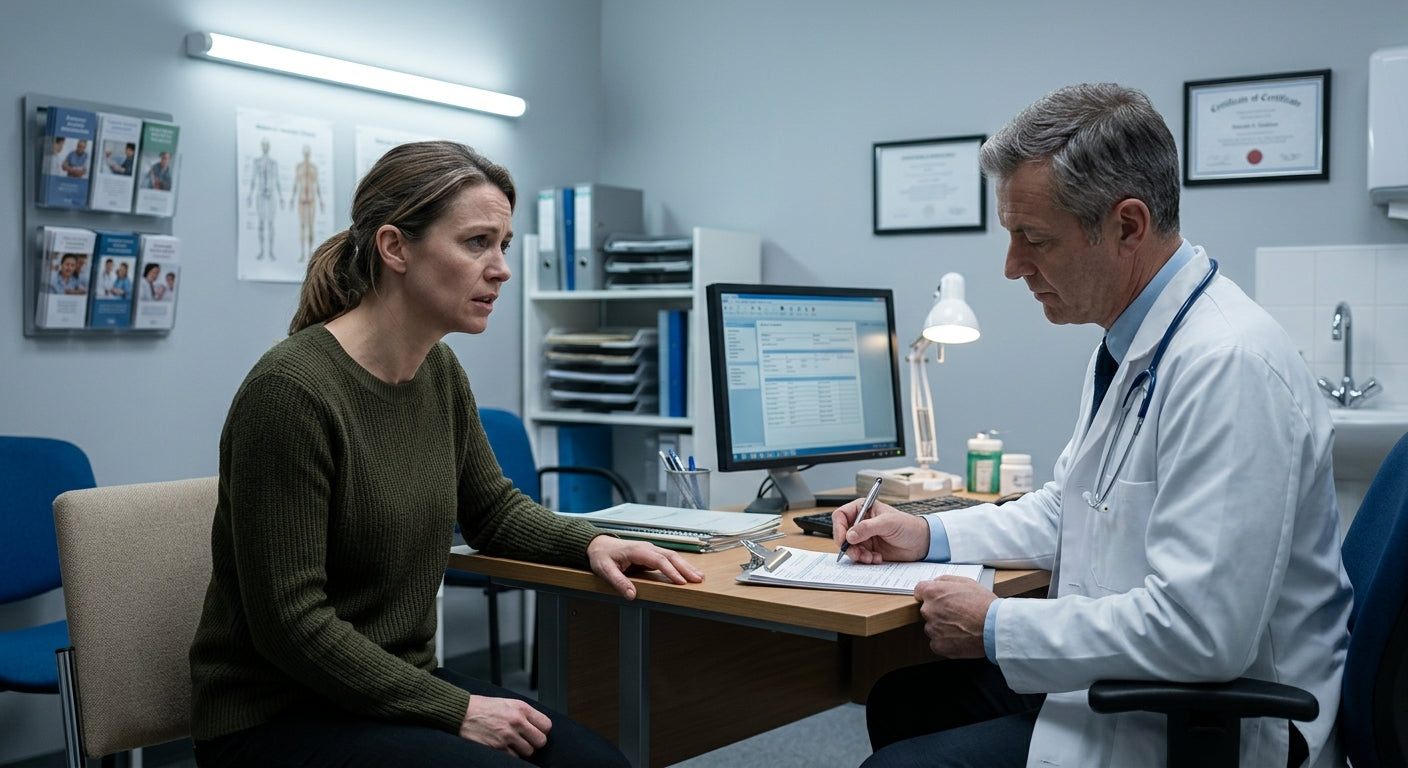
You did not get to see him until you had spent close to half an hour in his waiting room filling out a questionnaire, and he says he meant it. People arrived irritated about it. He had a thyroid questionnaire specifically. His reason is one sentence.
Dr. Martin on why:
Dr. Martin, The Doctor Is In, Episode 1538Well, because sometimes blood tests can be unreliable.
So the form was not admin. It was a second instrument, collecting the information a blood draw cannot: how long this has been going on, what changed and when, what you notice at four in the afternoon that nobody measures.
Symptoms trump testing
That phrase is the rule he gave his own staff, and he is careful about how far it goes.
Dr. Martin on ranking them:
Dr. Martin, The Doctor Is In, Episode 1538Not that I didn't like blood tests, I did, but I like symptoms.
He says he learned it from his father, and he puts it as a duck test. If it walks like a duck and talks like a duck, it is a duck. Hair falling out, eyebrows thinning, dry skin, feeling terrible, looking at food and gaining weight. That, he says, is a thyroid picture, and he was not going to let a single number talk him out of what was sitting in front of him.
Used properly this is not permission to skip the test. It is an instruction to write down what is actually happening to you before the appointment, so the number lands on top of a history instead of replacing one.
Two more he would always check
Beyond the hormones there are two he treats as near automatic in anyone older, and neither is expensive.
- Vitamin D. He calls it vitamin D for everything and treats it as anti-inflammatory. His view is that every senior in a home is low.
- B12. Same group, same answer. He says something missing in an older person is very often B12, and it is one of the first things he would check.
Neither is a hormone, but both sit underneath the symptoms people bring to a hormone appointment, which is why he wanted them on the page. If that is the one you want to chase, why people are so low in B12 is the place to start.
What he did next
With the panel and the questionnaire in front of him, his move on hormones was not to add estrogen. He calls himself a balancer of hormones, and the target is the gap between estrogen and progesterone.
Practically, that starts with food, because insulin is a hormone too and it sits in the middle of everything else. Then the liver, because that is where excess estrogen gets cleared and where most of your T4 becomes T3.
Ask for the full panel. Write the symptoms down. Do not let one number close a question your own body has been answering for a year. And nothing on this page is a reason to change anything you have been prescribed.
Common questions
What hormones should a woman over 60 have tested?
He points at a full thyroid panel rather than TSH alone, and at estrogen measured against progesterone rather than on its own.
Is TSH enough to check the thyroid?
He says doctors usually rely on TSH unless they do a full panel, and that even then the thyroid has too many strings attached to it for one number to settle it.
Are blood tests reliable for hormones?
His answer is that sometimes blood tests can be unreliable. That is exactly why he ran a questionnaire alongside them rather than instead of them.
Should estrogen be tested on its own?
He says the problem is never estrogen going down, it is estrogen and progesterone being out of balance. A single estrogen value does not answer that.
What else did he check in older people?
Vitamin D and B12. He says every senior in a home is low in both, and they are cheap things to know.
Read next: Should A Woman Over 60 Take Testosterone? and When Do A Woman's Hormones Actually Change?.
Work on the balance
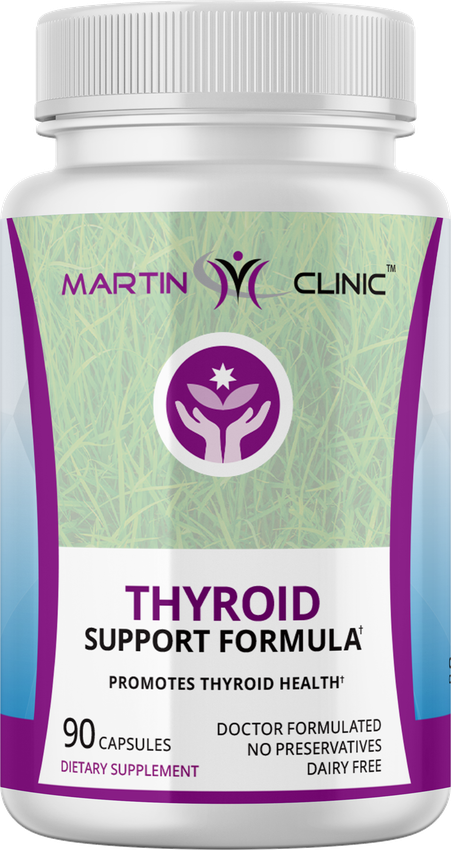
Martin Clinic's Hormonal Support Formula is built for the job he describes here, the estrogen and progesterone balance rather than topping one of them up.
60-day money-back guarantee. Nothing here is a reason to start or stop anything a doctor has prescribed. Talk to your doctor first.These statements have not been evaluated by the Food and Drug Administration. This product is not intended to diagnose, treat, cure, or prevent any disease. Always consult your healthcare practitioner before starting a new supplement, especially if you are pregnant, nursing, taking medication, or have a medical condition.