Why yeast infections still happen after 60
Many women assume yeast infections belong to their younger years. Then, at 63 or 70, one arrives after a course of antibiotics and they wonder what went wrong. Doctors will often point to the changes after menopause: lower estrogen, thinner tissue, and blood sugar that tends to run higher with age. Those are the usual explanations.
Dr. Martin goes one step back. On episode 783, reading a new study on how candida hijacks the immune system, he stopped to walk through how a woman gets a yeast infection in the first place. His answer had nothing to do with age and everything to do with what wiped out her friendly bacteria.
The antibiotic sequence
He put it as something most women already know from experience:
Dr. Martin, The Doctor Is In, Episode 783Well, ladies, you know how you get a yeast infection, right? You take an antibiotic for a bladder infection then you get a yeast infection. How often does that happen? Quite often.
For an older woman this sequence is especially common, because bladder infections tend to become more frequent after menopause, and each one usually means a prescription. Every prescription, in his view, is another hit to the bacteria that were keeping yeast in its place.
His picture of the gut is a war between two armies of bacteria, good and bad. When an antibiotic wipes out the good guys, the bad guys get the upper hand, and then a third army moves in. That third army is candida albicans, yeast. He calls it a bear, and his rule for bears is not to feed them.
The problem with antibiotics, he says, is that they kill friendly bacteria, and if you do not replace them, you are set up for what comes next.
Why candida goes where it goes
He uses the same comparison every time he explains this, and it is the easiest way to understand where a yeast infection shows up.
Dr. Martin, The Doctor Is In, Episode 783Women get yeast in the privates. Why is that? Oh, moisture. Remember now, candida is the first cousin of mold. Where do you find mold in your home? Oh, in the basement.
Mold grows where there has been water damage, in the bathroom or the basement. Candida, he says, looks for the same thing in the body. That is why he lists the sinuses, the lungs and the bladder alongside the vaginal area. They are all moist, and they are all places he says yeast loves to settle.
It also explains why he talks about a bladder infection and a yeast infection in the same breath. In his view they are often the same problem in two places. A woman with a positive urine test but no burning may have, as he sees it, candida sitting there, and another antibiotic she does not need can make that worse rather than better.
"The enemy of yeast is eggs, meat, and cheese."
Dr. Martin, The Doctor Is In, Episode 783The other triggers he names
Antibiotics are the main one, but they are not the only thing on his list. In the same stretch of the episode he names two more that apply to plenty of women.
Dr. Martin, The Doctor Is In, Episode 783You take an antibiotic, you take non-steroidal anti-inflammatories like Advil or Aleve or over-the-counter pain killers. Ladies, you're on the birth control pill, hormonal, and they're usually giving you estrogen, by the way. And you're setting yourself up for yeast, for fungal.
For a woman over 60, the birth control pill is usually in the past, but the over the counter painkillers often are not. Daily Advil or Aleve for knees, hips or a sore back is common at this age, and he puts it in the same category: something that affects the microbiome and tips the balance toward yeast. If you take them regularly, that is worth raising with your doctor.
His last point is about how clean we keep everything. He says we over clean and over sanitize, killing good bacteria along with the bad, and that is part of why he thinks we see so much more yeast overgrowth today.
What feeds it, and what starves it
Yeast needs food. He describes it as a bad little pet that calls your name several times a day, wanting to be fed. What it wants is very specific.
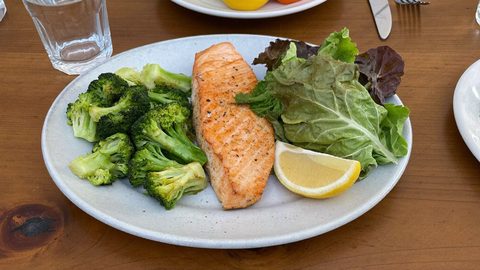
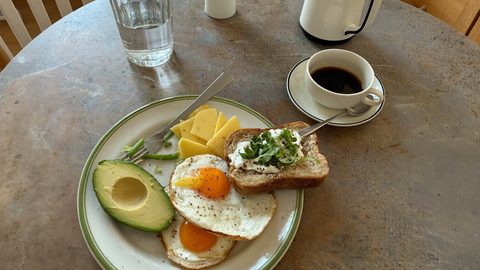
Dr. Martin, The Doctor Is In, Episode 783The enemy of yeast is eggs, meat, and cheese. The friend of yeast is sugar and bread and noodles and rice and cereals, and they'll feed your yeast big time.
That list surprises a lot of women, because bread, rice and cereal are the foods they were told were healthy. To yeast, he says, they are sugar. A woman who keeps getting yeast infections and starts her day with toast and cereal is, in his view, feeding the problem every morning. Swapping that for eggs and cheese is the change he would make first. His case for the food side of gut health is in gut health for women over 60.
The probiotic he wants with every antibiotic
He is clear that he is not against antibiotics. He says they are very good, and that some infections need them. What bothers him is that they are handed out without anything to replace what they destroy, and that people are still told to finish the bottle when the advice he cites is to stop once the symptoms are gone.
What he wants at the pharmacy counter is simple. Here is your antibiotic, stop it when the symptoms go away, and here is your probiotic.
Dr. Martin, The Doctor Is In, Episode 783I was screaming 30 years ago about probiotics and the effectiveness of it, and I don't mean yogurt.
For what kind of probiotic he does mean, read soil based vs refrigerated probiotics.
Common questions
Why do older women get yeast infections?
Dr. Martin says the most common trigger is an antibiotic, often for a bladder infection, which wipes out friendly bacteria and lets candida take over. Lower estrogen and higher blood sugar after menopause can add to it.
Can painkillers cause a yeast infection?
He lists non-steroidal anti-inflammatories like Advil and Aleve alongside antibiotics as things that affect the microbiome and set a woman up for yeast.
What foods feed a yeast infection?
In his words, sugar, bread, noodles, rice and cereals feed yeast big time. Eggs, meat and cheese are its enemy.
Should I take a probiotic with an antibiotic?
He says yes. Antibiotics kill friendly bacteria, and if you do not replace them, yeast moves in. He wants a probiotic handed out with every antibiotic prescription.
Replace what the antibiotic took
Antibiotics kill friendly bacteria, and he says you have to replace them. Martin Clinic's Probiotic Complex is the formula he built to put them back.
60-day money-back guarantee. Formulated in clinic.These statements have not been evaluated by the Food and Drug Administration. This product is not intended to diagnose, treat, cure, or prevent any disease. Always consult your healthcare practitioner before starting a new supplement, especially if you are pregnant, nursing, taking medication, or have a medical condition.